
The Rescue Through the Sewers
Les MisérablesThis thread follows Jean Valjean’s dangerous passage through the Paris sewers as he chooses Marius’s life over his own safety.
increasing Bearing strength in each event
 decreasing
Bearing strength in each eventdecreasingEntering the Underground
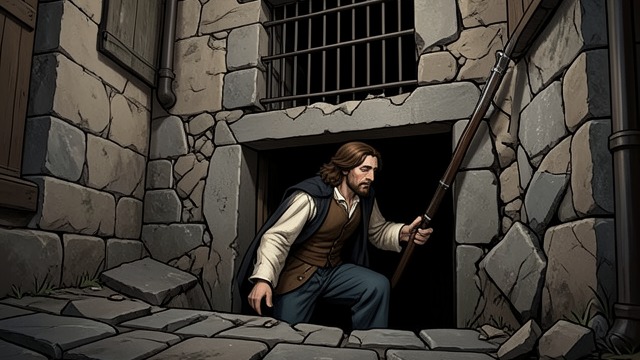
Entering the Underground
An exit below the battle
Jean Valjean carries the unconscious Marius away from the barricade while soldiers attack the defenders. He finds a loose grille hidden beneath displaced paving stones.
The opening offers an escape from immediate gunfire but leads into an unknown underground world. Valjean uses the skills of a man who once survived through escape.
A new burden
He lowers himself and Marius into the passage, then closes the grille above them. The battlefield disappears, replaced by darkness and silence.
Valjean’s earlier rescue of Cosette from danger is echoed in a new form. This time he carries a young man whose presence has threatened his relationship with Cosette.
A Living Passenger
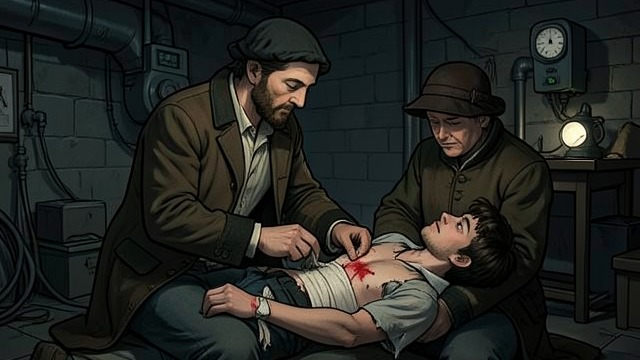
A Living Passenger
Testing for life
Jean Valjean cannot tell whether Marius is alive. In the sewer’s dim light, he checks the young man and finds that his heart still beats.
He tears cloth for bandages and stops the bleeding as best he can. He works with the tenderness of a brother, though he also feels jealousy and resentment.
Love against possessiveness
The wounded man is the person who may take Cosette from him. Valjean nevertheless carries and tends him instead of abandoning him.
The rescue shows that Valjean’s care is not free of painful emotion. What makes it moral is his willingness to act for Marius despite that emotion.
The Address in the Wallet
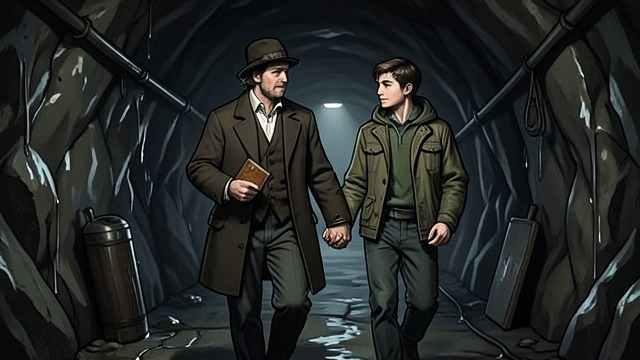
The Address in the Wallet
A clue to the family
While tending Marius, Jean Valjean finds a wallet containing instructions to take the young man’s body to Gillenormand. He reads the address and returns the wallet.
The note tells Valjean where Marius belongs if he cannot save him. It also gives the journey a destination beyond mere escape.
Carrying on
After eating the bread he finds, Valjean regains enough strength to continue. He carries Marius deeper through the passages despite exhaustion and filthy conditions.
The small details of survival matter because the rescue depends on sustained effort, not one heroic gesture. Valjean keeps going when the burden becomes almost impossible.
The Locked Gate
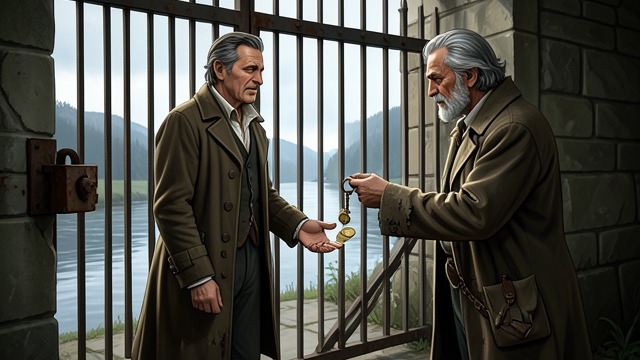
The Locked Gate
A failed escape
Jean Valjean reaches an outlet near the river and discovers that its heavy gate is locked. The daylight and open air are visible beyond it, but the barrier will not move.
He has no reliable way back through the dangerous route he has crossed. He realizes that the sewer may be another prison.
A meeting with Thénardier
Thénardier appears with the key and assumes that Valjean has murdered Marius. He offers to open the gate in exchange for money.
Valjean accepts the bargain because the alternative is leaving Marius trapped. The escape is made possible by an opportunist whose motives remain selfish.
Javert at the River
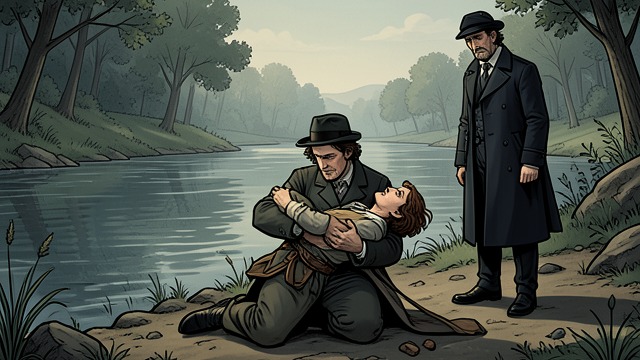
Javert at the River
A pursuit resumes
On the riverbank, Jean Valjean tries to revive Marius and sees Inspector Javert behind him. The officer has followed the escape route and once again has power to arrest his quarry.
Valjean identifies himself and asks Javert first to help carry Marius home. Javert agrees, then lets Valjean return to his lodging instead of taking him into custody.
A break in certainty
Javert’s unexpected choice is the final outcome of a journey built on repeated reversals. Valjean has saved Marius, and the law has failed to contain the moral bond between the two men.
The sewer passage does not end the conflict between them. It changes the conflict into a crisis within Javert himself.
June 6, 1832, as the barricade falls
During the first stretch through the sewers
After Jean Valjean finds Marius’s wallet
Evening, at the sewer outlet
June 6, 1832, after leaving the sewers
